Asia
Tayikistán · Qué significan los colores y símbolos
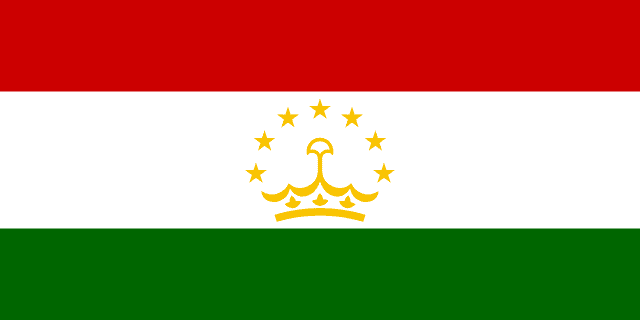
Tayikistán — flagcdn.com/w640
Datos clave
- Adopción
- 24 November 1992
- Proporciones
- 2:3
- Capital
- · 04:48 (hora local ahora)
Qué significan los colores y símbolos
Red, white and green (embassy account)Documentado / oficial
The green band symbolises the valleys — only about 7% of Tajikistan is valley, the rest mountains; the white band the country's chief wealth, cotton, and the snow and ice of the high peaks; the red band the republic's unity and brotherhood with the world's other peoples.
The central crown and seven starsLectura popular, no oficial
The crown represents the Samanid dynasty and the Tajik people (a folk etymology links 'Tajik' to the Persian tâj, 'crown' — scholars dispute it); the seven stars above come from the Persian-mythic completeness and happiness of the number seven — tradition tells of seven mountains and seven orchards in the sky, a star shining over each mountain.
Other standard readings of the bandsLectura popular, no oficial
Red is also read as victory and sunrise, and the warriors who died defending the land; white as purity and morality; green as nature's bounty, Islam and Nowruz; and there is a social reading of the three bands as manual, intellectual and agricultural workers.
Explora este país
Ciudades de este país
Imágenes de banderas: FlagCDN (flagcdn.com). Los significados, las fechas de adopción y las proporciones se compilan de registros vexilológicos públicos y fuentes oficiales; cada entrada de simbolismo se etiqueta como documentada/oficial o como lectura popular (no oficial). Lo que no pudo verificarse se omite, no se adivina.
De este sitio
🎉 Cuentas atrás en directo a los festivales del mundo
Fiesta de la Primavera, Navidad, Pascua, Diwali, el próximo cambio de horario y más, cada uno con su página y su tarjeta para compartir.
De este sitio
🧰 Herramientas de tiempo gratuitas en una sola caja
Hora exacta con milisegundos, conversor Unix, cronómetro, temporizador, calculadora de duración y de semana/edad.
Fuentes de datos: Open-Meteo (el tiempo) · ExchangeRate API (divisas, actualización por horas/días) · Nager.Date (festivos) · Wikipedia (tal día como hoy) · GeoNames (datos básicos de ciudades, CC BY 4.0)