Asia
Turquía · Qué significan los colores y símbolos
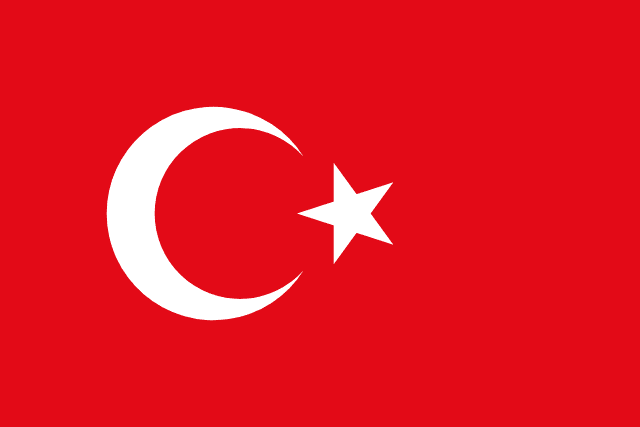
Turquía — flagcdn.com/w640
Datos clave
- Adopción
- 29 May 1936 (fixed by the Turkish Flag Law; the crescent-and-star design descends from the 1844 Ottoman Tanzimat flag)
- Proporciones
- 2:3
- Capital
- · 02:48 (hora local ahora)
Qué significan los colores y símbolos
Crescent and starDocumentado / oficial
Inherited directly from the late Ottoman flag, the crescent-and-star being the traditional emblem of the Ottoman-Turkish world; the Flag Law prescribes the emblem's exact geometry without a symbolism clause.
The legend of the crescent reflected in bloodLectura popular, no oficial
The tale of the crescent and star reflected in a pool of blood after a battle is beloved in Turkey but has no historical basis.
Breve historia
The red crescent-and-star became the Ottoman naval and state flag in 1844, continued into the Republic of Turkey in 1923, and was geometrically codified in the 1936 Flag Law — inner and outer crescent diameters, star placement and all — making it one of the world's most precisely specified flags.
Explora este país
Ciudades de este país
Imágenes de banderas: FlagCDN (flagcdn.com). Los significados, las fechas de adopción y las proporciones se compilan de registros vexilológicos públicos y fuentes oficiales; cada entrada de simbolismo se etiqueta como documentada/oficial o como lectura popular (no oficial). Lo que no pudo verificarse se omite, no se adivina.
De este sitio
🎉 Cuentas atrás en directo a los festivales del mundo
Fiesta de la Primavera, Navidad, Pascua, Diwali, el próximo cambio de horario y más, cada uno con su página y su tarjeta para compartir.
De este sitio
🧰 Herramientas de tiempo gratuitas en una sola caja
Hora exacta con milisegundos, conversor Unix, cronómetro, temporizador, calculadora de duración y de semana/edad.
Fuentes de datos: Open-Meteo (el tiempo) · ExchangeRate API (divisas, actualización por horas/días) · Nager.Date (festivos) · Wikipedia (tal día como hoy) · GeoNames (datos básicos de ciudades, CC BY 4.0)